“Go to Orlando’s. It’s been there forever. You’ll love it!”
…is how the hotel concierge responded, without hesitation, when we asked for a lunch recommendation. Swayed by her conviction, it was settled: we headed to Orlando’s Italian Restaurant on Avenue Q.
Serendipity
Some of the best stories on this site are the ones I come across when I’m not really looking. And so it was with Orlando’s.
What I was looking for was: lunch. But where the concierge sent me, I’d soon discover, was not just an Italian restaurant, but a regional landmark; a restaurant founded in 1965 by the grandson of Italian immigrants, and now in its third generation—of both same-family owners and clientele; a restaurant operating continuously, at this very same location on Avenue Q in Lubbock, Texas, for 60 years and counting, an exceptional milestone that only about 1-in-20 restaurants in the US will ever achieve.
Orlando’s is a restaurant that during its tenure has witnessed: the moon landing, the interwebs, a winning record by Texas Tech (just down the road) over that other technical college; it’s a restaurant that survived disco, dry county blue laws, COVID and an F5 tornado; a restaurant whose history involves cross-country coming-of-age road trips, motorcycle wrecks and life-changing recoveries, espionage, love at first sight, marriage, children, whole wheat bread, tomato paste, fire, nudity (nude modelling—relax Y’all), and decades of deals finalized with handshakes.
But when I headed there for lunch recently, on a sunny Friday in April, I knew none of this already well-known story. This is not, then, ‘the story of Orlando’s’—to claim so would be presumptuous. This is the story of me, learning the story of Orlando’s.
I’m starving. Let’s go.
Someone, it’s obvious, cares about this business
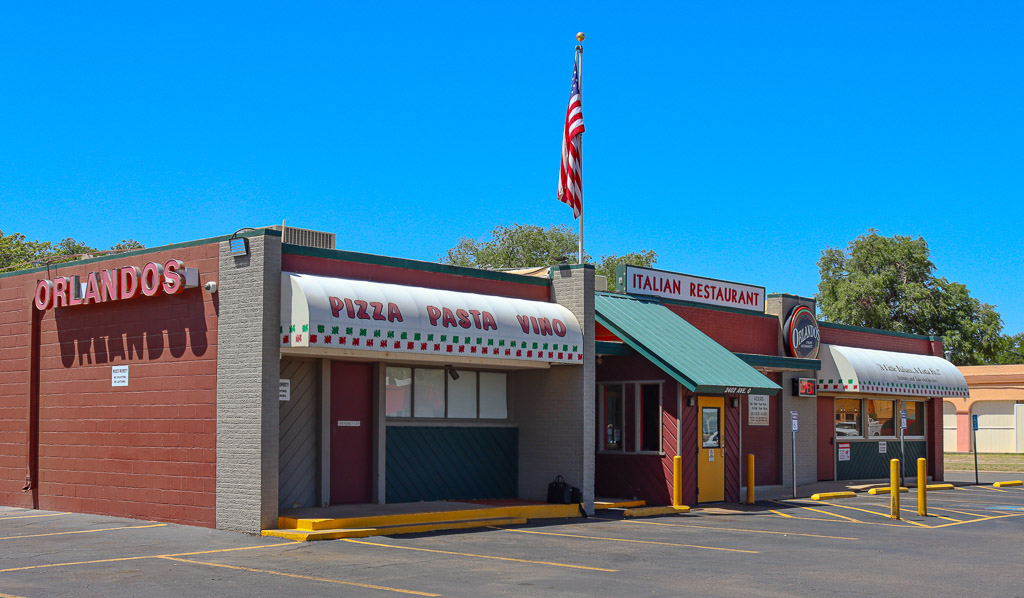
One of the first things I notice as we arrive, is that the property itself looks good. Parking lot’s clean, paint’s fresh, the entry doors sit square in their frames. They open smoothly and silently, as they should. I’m an old man; we notice these things. Someone, it’s obvious, cares about this business. Perhaps the concierge did us a solid?
We step into the vestibule,1 another small but important architectural feature, with an ancient history, back to Roman times, and with a timeless purpose: keeping the dust and noise out, and the clean and quiet in. Then through the second door and inside: darker, cooler; immediate relief from the brilliant West Texas sun.2 Exhale.
It’s lunchtime-busy, but we’re promptly greeted and shown to a booth. Red and white checkered tablecloth, of course, as it should be. Candles in wicker wine bottles would have fit right in—more on those later. A placard, small but permanently attached to the wall, informs us we are seated in the “Travis S. Ware Lawyerin’ and Relaxin’ Booth.” Noted.3
Tex-Italian
The menu is Italian, but with a southwest influence. “Tex-Italian,” the waiter explains. I’m also happy to see green chile on the menu—a clear indicator you’re getting closer to the western parts of the state, and to neighboring New Mexico, where you can order your entrée “Christmas”—with both green and red sauce—and they will nod. Not sure of the official story behind their slogan “The Land of Enchantment,”4 but I have my own reasons.
As an appetizer, we order tortellini with what they call their signature ‘Down-N-Dirty’ sauce—seriously, how could you not? For the entrée, I choose green chile chicken linguine; my wife, spaghetti; my daughter, ravioli; and my son Sam, a human who is made entirely of burgers, fries and cokes—orders: a burger, fries and a coke. But there’s a Tex-Italian twist: “Your choice of fries or [tortilla] chips,” the waiter offers. Enchanted indeed. “Chips, please.” Atta boy, Sammy.
Captain of the ship
We finish our meal. The concierge was right. The food and the service were great. I leave a good tip. We gather ourselves to go, and that would have been the end of it; I would have left and remained the only one in town oblivious to the long and colorful history of the place, were it not for a guy, standing somewhat conspicuously, at a railing near the bar. Not glowering, just watching, attentively, over the dining room.
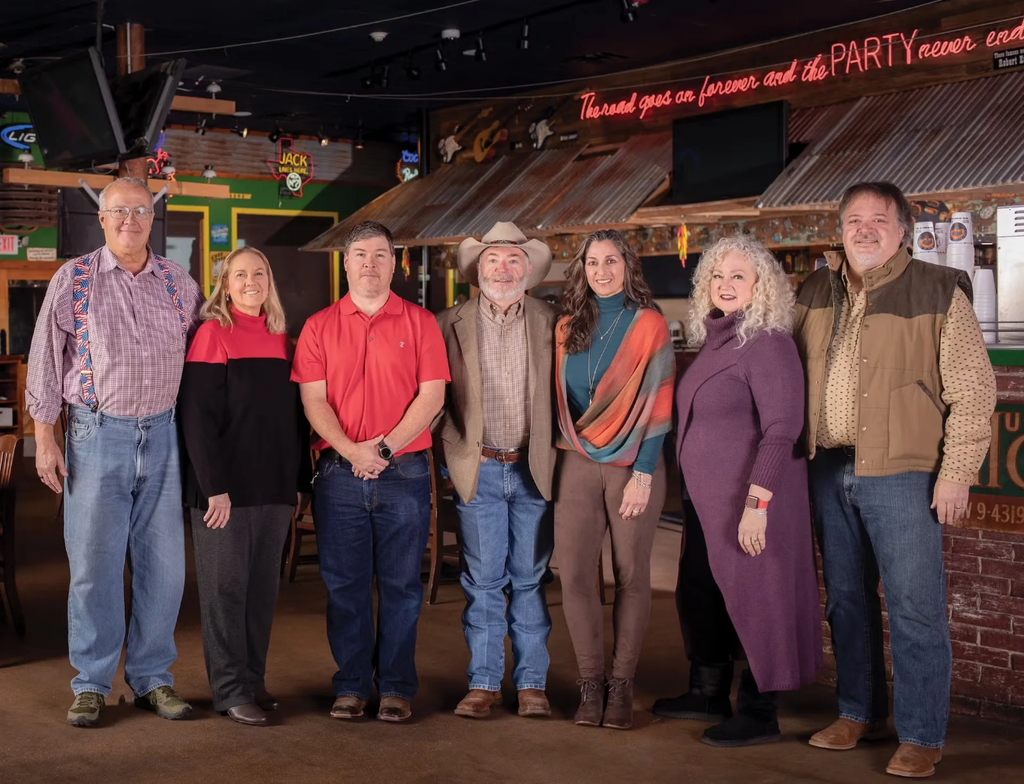
This image deserves a fuller explanation. The bar at Orlando’s is on one side of the main dining room, and it’s raised up a foot or so above the rest of the room. In front of the bar is a railing. At the risk of being too dramatic, envision a ship’s captain, standing at the helm, hands on the wheel, with a clear view of the deck and what’s ahead—that would not be unlike the image of this man, hands on the railing, watching over the dining room. ‘Someone cares about this place,’ I’d thought earlier. This must be the guy.
As old men do, I extended my hand, said hello, told him the food was good, the service was friendly, and that I appreciated it when people took pride in their work. “Thank you. What did you have?” Green chile chicken linguine. “Ah, one of our best sellers.”
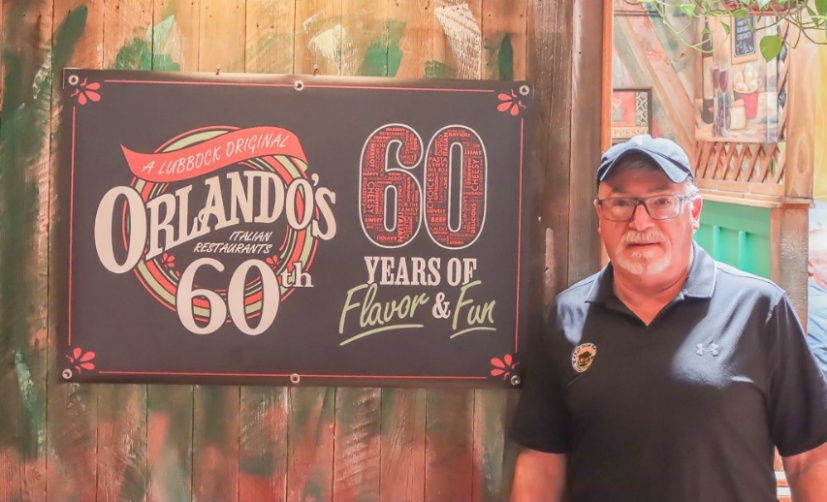
The captain of the ship turned out to be owner David Cea, whose great-grandparents, Mr. and Mrs. Louis Orlando, had arrived on a different ship, over a century ago into Ellis Island as Italian immigrants in 1918.
As David explained more of the story, I was beginning to realize that this really was a special place. “I took it over from my Dad,” he said, “and we’re now celebrating our 60th year in business.” Impressive. I told him a little about my project. We exchanged business cards and I promised to follow-up.
By the time I left that day, I was convinced that Orlando’s and what its owners had built over sixty years, was a great story worth telling. Later, research soon confirmed it was even more special than I initially thought.
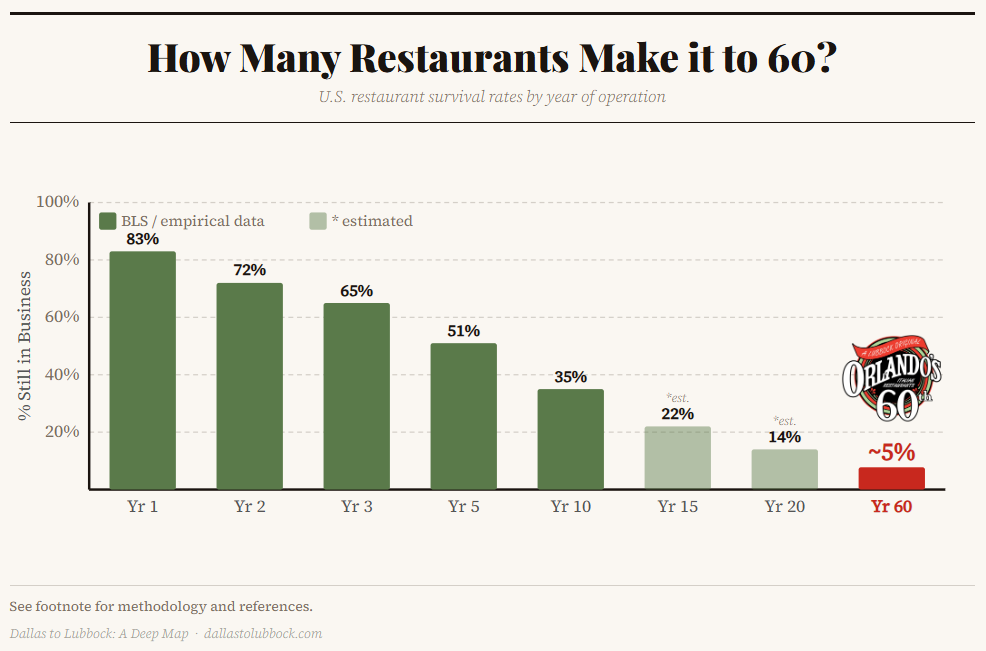
As it turns out, based on data from the Bureau of Labor Statistics, Cornell University and restaurant industry analysts, a 60-year run is extraordinary—a milestone only about 5% of U.S. restaurants will ever reach. Impressive indeed. For the nerds among us (present company included), the arithmetic of this estimate is fully explained in the Texas-sized footnote below. 5 But before reading on, go back to the top of this article and re-read that chronicle of the last six decades. Mix in some memories of your own. Then consider: all that time, is how long they’ve been at this.
Excited by the analysis, I immediately sent David a follow-up email, explained a bit more about my project, and asked for an interview. “I would love to do this,” he replied. Great news—for a project like this one, not everyone is willing to share their story. We agreed on a date and time. Things were moving.
But then, a problem.
Because in my haste to secure an interview to learn the full history of Orlando’s, I’d overlooked what was already posted on their website: the full history of Orlando’s. More specifically, “A Slightly Abbreviated History of Orlando’s and Caprock Cafe” written by David’s mentor and long-time partner, Mr. Loyd Turner.
Mind you, Mr. Turner’s posted history is not the typical corporate “boilerplate”—the insipid pap6 that so often disappoints, right after you click on: “About Us.” Nosir. This here was a complete, authentic, and wickedly funny account of the entire enterprise written by one of the partners who’d actually lived it.
Now what?
What do you do when the story you want to tell has already been expertly told? My extensive training in journalistic methods—exactly 0 days—had been exposed.
Slight panic. If I smoked, I would have stepped outside for a cigarette. A cold beer worked just as well, and helped me arrive at the (in retrospect obvious) conclusion: stories like Orlando’s, like all good stories, are resilient enough to be told and re-told. In fact, they should be re-told, because of their power to inspire many others.
Deep breath. Exhale. Crisis of my own making: averted. Here then, is a look back at the history of Orlando’s, drawing largely from Mr. Turner’s posted material.7
“Go west young man, and grow up with the country”8
The story of Orlando’s begins in Brooklyn. Michael Frank Cea, born 1930, grew up there, surrounded by his extended family, including his maternal Grandparents, Mr. and Mrs. Louis Orlando, who had immigrated from Italy in 1918, and for whom the business was later named.9
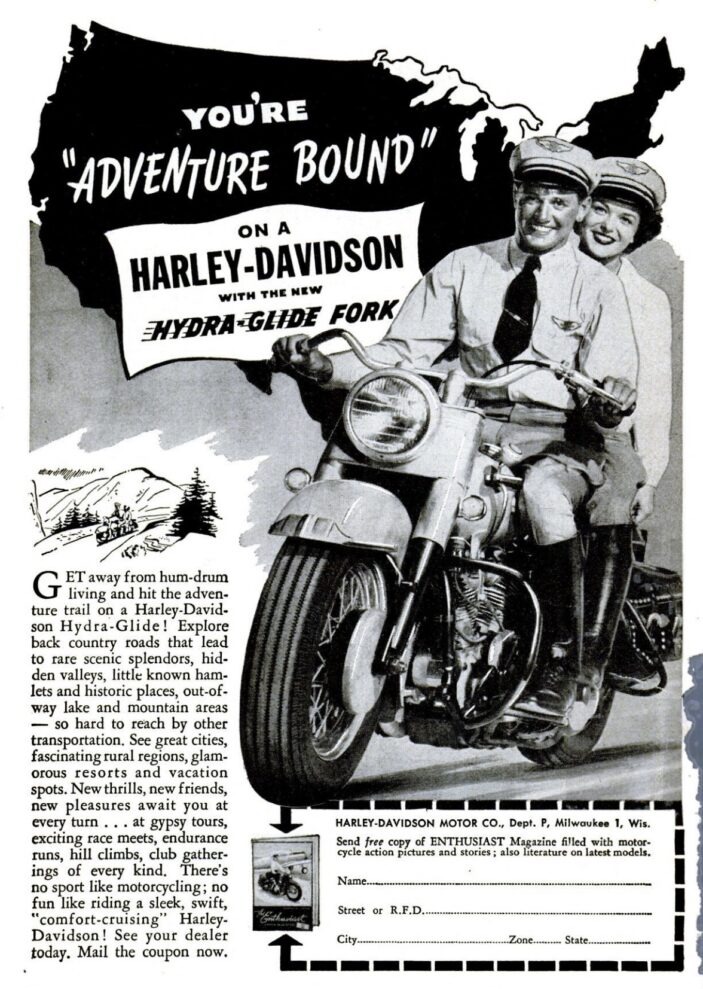
It was a good home. But he grew restless, as young men do. So he headed west, at the leading edge of what would become known as ‘the Sunbelt boom.’ Loyd writes:
“Despite the great Italian food and the big city lights, Mike had a longing for more sky, so in 1949 when he turned 19, Mike packed up his clothes, kissed everyone good-bye, cranked up his Harley-Davidson motorcycle, and drove down the highway across the nation to the sun-lit city of Albuquerque, New Mexico.”
Sounds like a great adventure. The only problem was, Mike was headed for Los Angeles. His stop in Albuquerque was both unplanned and abrupt, because that was where, in Loyd’s words, he “ran the Harley under a semi-truck.”
“Lucky it didn’t kill him,” David told me later. True enough, but had it not been for the crash, Orlando’s in Lubbock, Texas would almost certainly never have come to be. Because rather than heal up and push on to LA, Mike decided to stay.
Land of Enchantment
Albuquerque would be where Mike got his start in the restaurant business, first at Bob’s Drive-In, then working for fellow Italians Frank Vengalia10 and Leonard Li-Petri in their nightclub Vena’s Roarin’ 20’s Saloon on Central Avenue, a speak-easy themed bar and grill with Vegas entertainment acts, and then later at the full-service Casa Luna Italian Restaurant, which opened a little further down Central Ave., in 1954. Buck and a quarter for Spaghetti and Meat Balls; all you could eat. Open ‘til midnight. On a Wednesday no less. Imagine that.
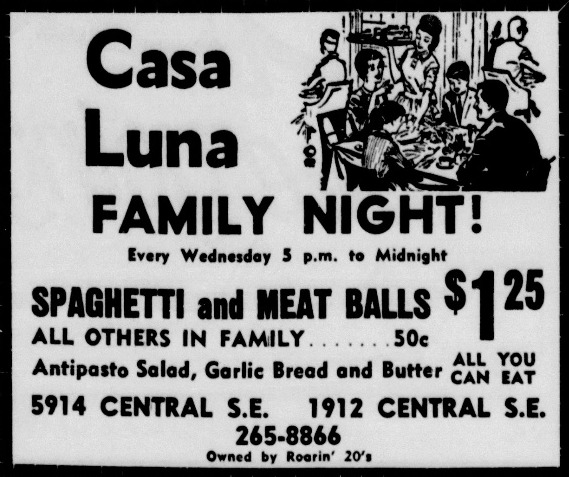
The mid-1950s was a good time to be an Italian restaurateur, especially in Albuquerque, where the population more than doubled in the ten years Mike would spend there.11 Italian cuisine had gone mainstream: brought by immigrants like Mike’s Grandparents, then boosted by the GIs returning from the war, hopeful and hungry. And the hunger went beyond the pizza and pasta. Middle class America had developed an appetite for the whole event of “going out to dinner” and the full-service Italian restaurant hit the spot—affordable, approachable; classier than a diner and without the expense or intimidation of French. Dean Martin provided the soundtrack: That’s Amore (1953) and Disney the images: Lady and the Tramp (1955).
Mike moved up the ranks, learning all aspects of the restaurant business—kitchen operations, financials, and together with the two partners and their wives: developing the recipes. Loyd writes: “I don’t know if you can imagine five Italians agreeing on anything but finally they did.” Many of those recipes would later be handed down to Orlando’s.
Alongside his career, Mike’s new family was also taking shape. In 1957, Mike married Joan Mary Mullin, originally from Youngstown, Ohio. A Buckeye and a Brooklynite, finding enchantment in New Mexico. Son David arrived in 1958, daughter Katie in 1961. Mike took on new responsibilities, opening and managing new branches of Casa Luna, moving together with the family across the state, from Albuquerque, to Las Cruces to Roswell.
2402 Avenue Q
By the mid-1960s and ten years into the restaurant trade, Mike was ready to open his own place. He thought initially of San Diego but decided the expenses would be too high. It was his supplier Phil Decato who pointed him toward Lubbock, with “glowing stories” of the opportunities there, especially the area around Texas Tech.12 Phil even had a specific location in mind.
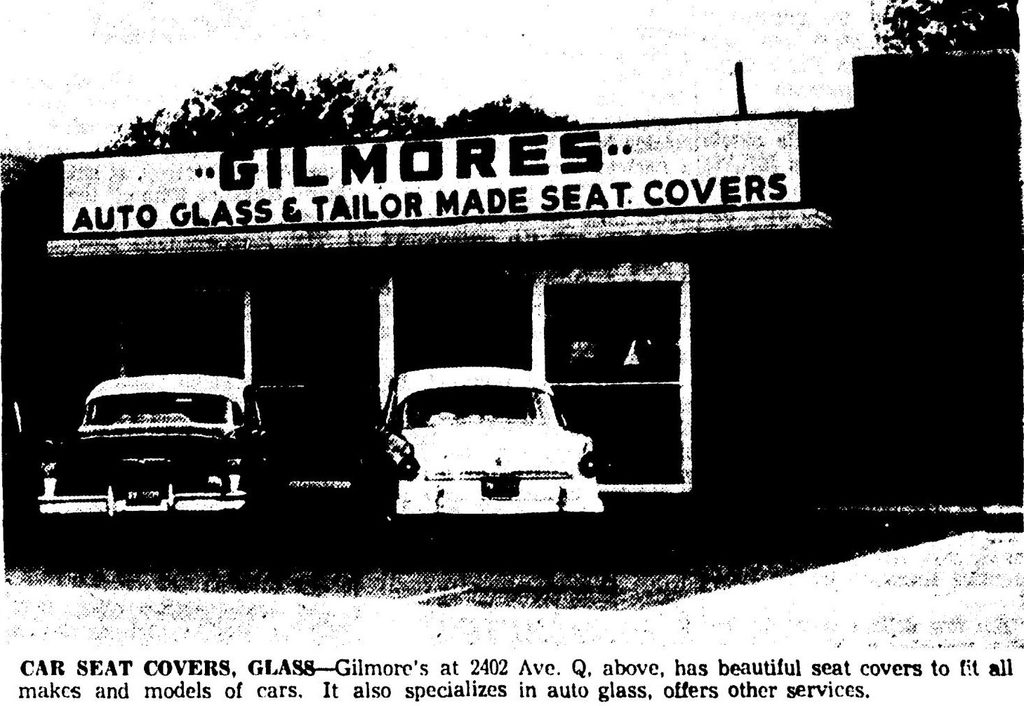
Gilmore’s, an auto glass and seat cover shop, recently shuttered, stood at the southwest corner of Avenue Q and 24th Street. It was a good location, with good traffic flow—Ave. Q doubles as US Hwy. 84—and right across the street from Hood Park, which every December back in those days hosted Santa Land, Lubbock’s long-running (and still ongoing) annual outdoor Christmas festival. A 1962 Gilmore’s ad made the pitch directly: “The firm is ideally situated to install these seat covers while you let the children enjoy themselves.”13 Best of all: the location sat just a mile and a half from the Tech campus.
On one of his trips back east to visit the family in New York, Mike stopped in for a closer look. He walked the space, liked what he saw, and signed a lease. For the next several months he travelled back and forth to Lubbock, 180 miles each way—while still running Casa Luna in Roswell—to complete the extensive renovations that would transform an auto glass and upholstery shop into a full-service Italian restaurant.
Riding the wave
Just as with his arrival in Albuquerque, Mike’s timing was good. The same generation that brought Italian cuisine into the mainstream in the 1950s was now sending its sons and daughters—the baby boomers—to college. In record numbers.
As early as 1957, the New York Herald Tribune predicted it—right down to the year: “Everybody talks about the ‘tidal wave’ of students that is going to ‘hit’ the colleges by 1965.” 14 One of the universities riding that tidal wave was Texas Tech—in the exact same year that Mike and Joan Cea arrived to build their new place, a mile and a half from campus.
Serendipity.
At Tech, enrollment grew from roughly thirteen thousand in 1965 to more than twenty thousand a decade later—a story that made front-page news, in a font even bigger than the masthead.15 16

In August of ’65, with renovations complete, Mike moved the family to Lubbock. Loyd writes: “Frank and Leonard told Mike he could use all the recipes as long as he called his new restaurant something besides Casa Luna.”
A Legacy Begins
On Friday, October 15th, 1965, sixteen years after leaving Brooklyn and a crash that almost ended his life, then serendipitously set him on the path of a new one, and down to their last $1,500, Michael and Joan Cea opened Orlando’s Pizzeria and Italian Restaurant at 2402 Avenue Q in Lubbock, Texas.
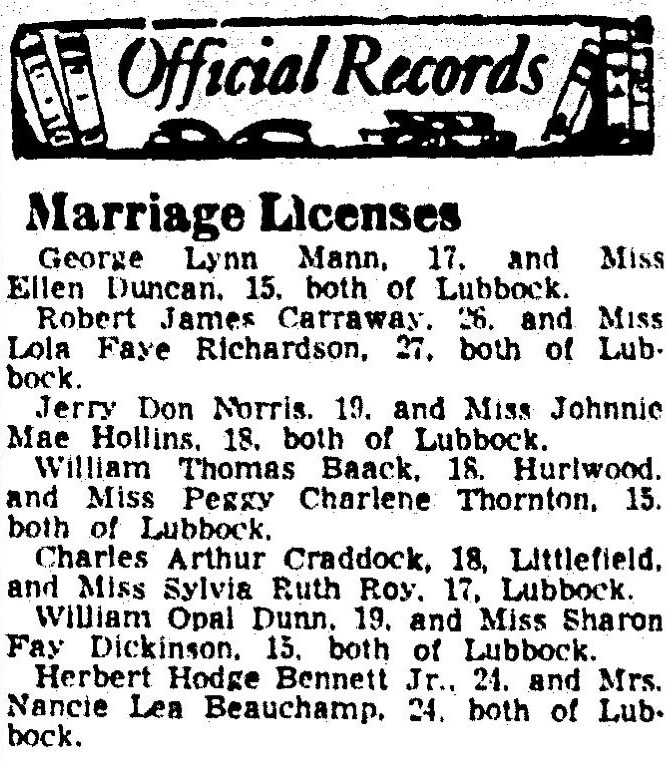
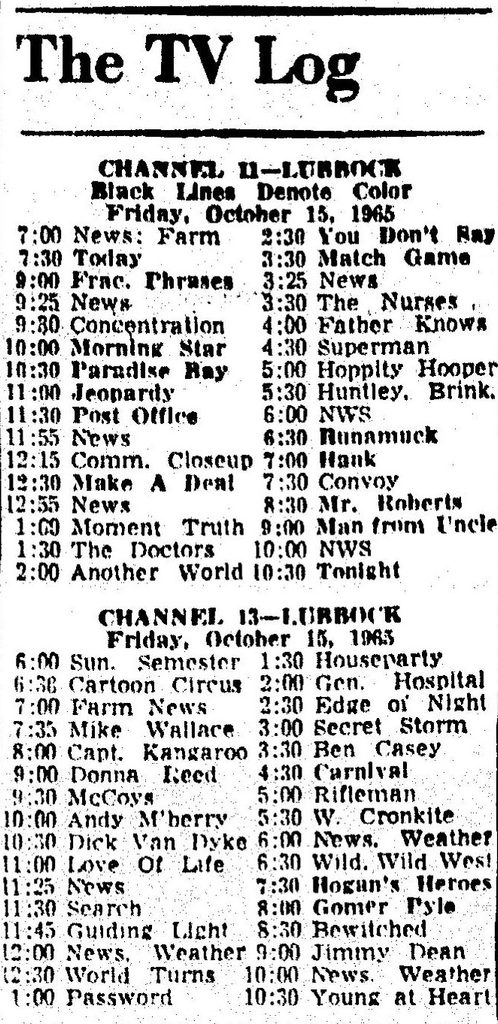
That day’s edition of the Lubbock Avalanche-Journal included these stories: The Los Angeles Dodgers celebrated their championship over the Minnesota Twins, behind the pitching of Sandy Koufax.17 Locally, the Texas Tech 40th anniversary celebrations continued, including a reunion of the undefeated 1938 Red Raiders, and seven young couples obtained their marriage licenses. After a nice dinner at Orlando’s one could sit back at home and enjoy, back-to-back, The Wild Wild West, Hogan’s Heroes, Gomer Pyle, Bewitched, The Man from U.N.C.L.E., then after tucking in the kids, local news and weather.
Family Affair
From its inception, Orlando’s was a family affair. Joan helped as a lunch cook, waitress and bookkeeper. David, just as his father Mike had done, worked his way up, from bussing tables, to dishwasher, and to full cook by the age of fourteen.
David recalls the early years, in the shop with younger sister Katie: “They didn’t have babysitters, so when they were workin’ we were here. I remember sleepin’ underneath the pizza tables while my dad was makin’ pizzas.” At night they would sleep on makeshift beds atop cases of tomato paste “because they didn’t have anybody to watch us, so we grew up in this restaurant.”18
The new business thrived. Loyd writes:
“On weekend nights the lines would stretch for blocks as people waited to get inside for a table. The candles were in old wicker wine bottles with years of colorful wax on them—the fire department outlawed the candles because they kept setting the paneling on fire. Pizzas to-go were wrapped in foil and placed in white millinery bags just like the New York pizza shops did.”19
Regional reputation
Within a few years of opening, the reputation of Orlando’s had grown beyond Lubbock, with reviews, commentary and clientele from surrounding communities.
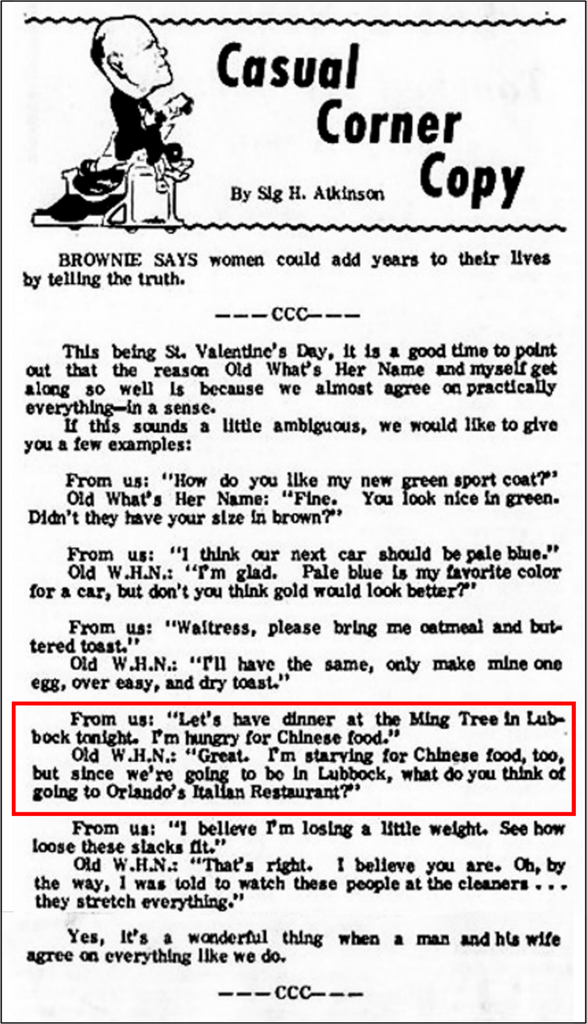
Above is the Casual Corner Copy column from Sig Atkinson, a regular front-page feature of the Brownfield News. On St. Valentine’s Day, 1971, Sig penned a humorous take on how he and his wife—“Old What’s Her Name”—would “agree on everything.”
For the women reading this, not to worry, because “Old W.H.N.” gets the last word on every quip.20 She also, apparently, has excellent taste when it comes to deciding where to go for dinner. 21
Casa de Vino
The business expanded again in the spring of 1972, after a majority of Lubbock voters decided that yes, please, they would like a glass of Chianti to enjoy with their lasagna. In a heavy turn-out—22,204 for, to 20,291 opposed, a modest but decisive victory—Lubbock had gone “wet,” ending its distinction as the largest dry city in the nation.22 The changes allowed for the sale of liquor by the drink for restaurants, hotels and motels, and Mike Cea was ready.23 After remodeling and expanding the interior he unveiled: the Casa de Vino lounge.
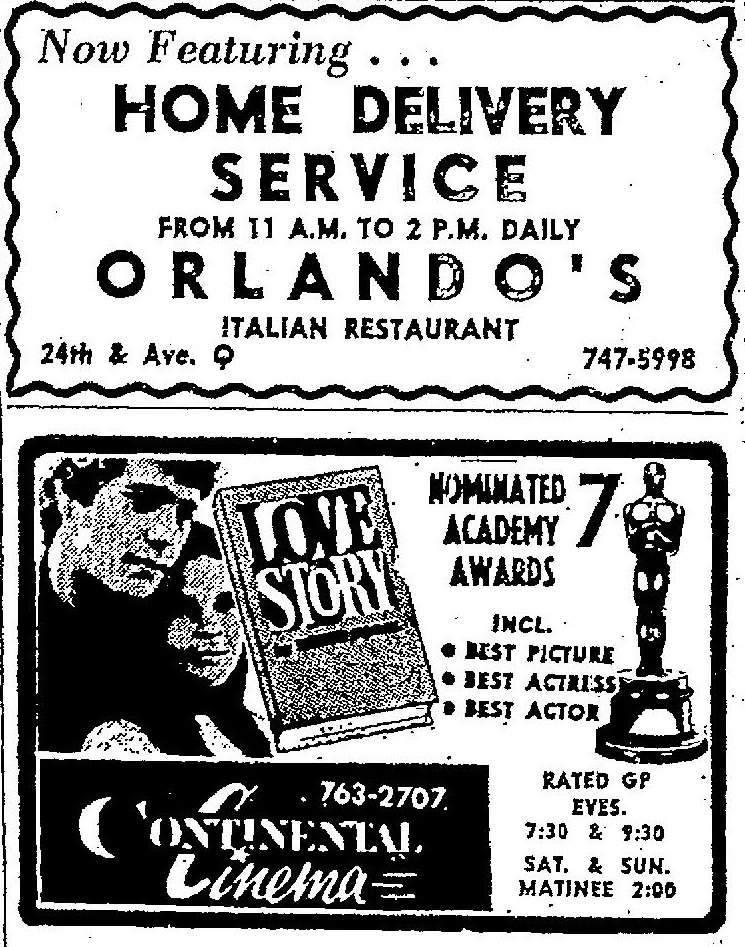
He also added new kitchen space, where David, now fourteen, manned the pizza ovens:
“I loved it,” David recalls. “I mean, my goal was to see how fast and how good I could put the food out… I’ve always loved working.” He credits his father for his strong work ethic. “My Dad did me a huge favor. He put me to work at an early age. And so I’ve worked a lot of nights, and a lot of weekends. I never had time to get in trouble, and I always had money in my pocket.”24
The partnership era begins
By the late 1970s, and in a little over a decade, Mike had established Orlando’s as a local and regional mainstay. Statistically speaking, he’d already beaten the odds—only about a third of restaurants ever make it past the 10-year mark.
But if the business was to not just survive, but grow, he needed a partner. Mike was approaching his 50s, and son David, drawn to a potential career in forestry, was not yet sure he wanted the family business. So he put the word out. The man who answered was about as unlikely a match as Lubbock could have produced.
Loyd Lee Turner of Fort Worth, enrolled as a freshman at Texas Tech in 1972:
“I remember it was Bob Bauer who lived on my floor who told me we had to go eat there. Bob and some other friends went down to eat the Small Beef Pizza for $2.00. I had no idea at that time I would be involved with Orlando’s some day.”
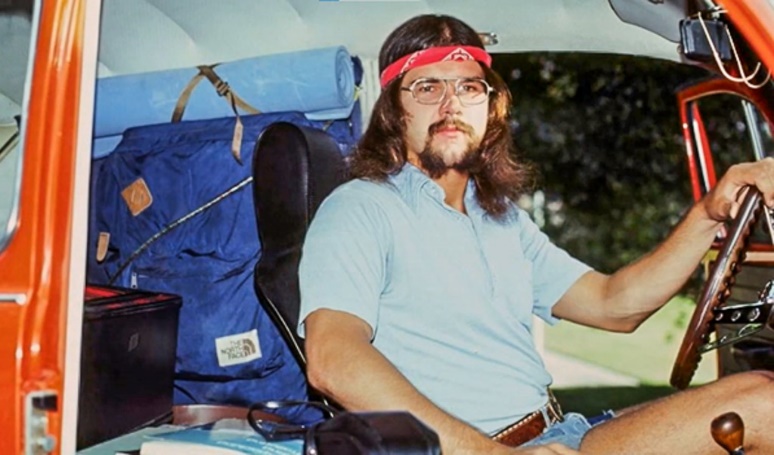
After Loyd’s graduation in 1976, like Mike a generation earlier, he embarked on a cross-country road trip—fortunately without the crash this time—in a ’71 Super Beetle with a bed inside, making it back to Lubbock in the winter of 1977. To pay the bills, he worked for the Texas Tech art department as a nude model ($5.00 an hour), then as a route salesman for Tom’s Toasted Peanuts.25
Loyd was also a self-described “health nut,” and “a student of natural living,” with plans to open a natural food store (plans he later realized with the launch of the Alternative Food Company). To make some extra money, and to compensate for the “definite sense of guilt”26 he felt about the salty and sugary snacks he sold as a Tom’s route salesman, Loyd began baking and selling loaves of healthy whole wheat bread. “Burrhead’s Bread” based on his nickname at the time, turned out to be a hit. He contacted a commercial real estate agent about locations suitable for a bakery and natural food store.
“The real estate agent had no bakery locations but he did have an Italian restaurant complete with an Italian… [Loyd] took one look at the situation, saw all that white flour people were eating, and decided that here was the perfect place for his beloved loaves of whole wheat bread.”
Picture it: A Brooklyn-born Italian restaurateur, sitting down to negotiate a partnership deal with a long-haired health-food evangelist, in conservative Lubbock, Texas.
“Mike told me that he needed a partner if the business were to grow, and in true Italian style, made me an offer I could not refuse. For $2,000 and signing on the dotted line for $35,000 in bank debt, I became a half-partner with Mike and we had ourselves a restaurant partnership. My first day as an Orlando’s partner was June 2, 1978. That was a Friday, and Orlando’s did $649.53 in sales for the day.”
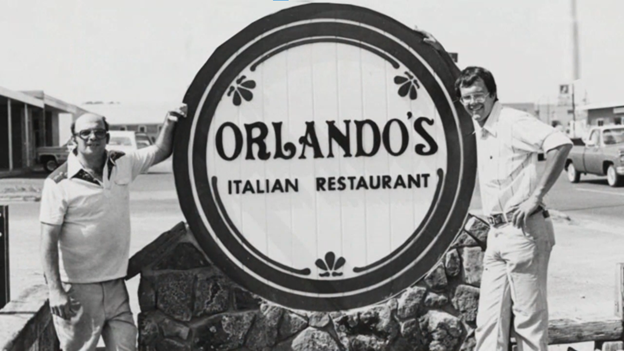
Other notable events and headlines in 1978: On July 4th, AC/DC opened for Aerosmith at the Coliseum in Lubbock. In December, a 24-year-old Stevie Ray Vaughan took the stage at Stubbs BBQ, 108 E. Broadway.27 The last German-built VW Beetle rolled off the production line, and a gallon of regular sold for 65¢.
Love at first sight
Two years later, Loyd’s bread—this time the banana nut variety—would again influence the future of the restaurant, in a case of cross-town competitor espionage involving a comely coed from Texas Tech. The sauce thickens.
Gardski’s Loft had a good run in Lubbock, offering burgers and comfort food for almost 40 years from their location on Broadway, before closing the doors for good in 2015. But back in 1980, they were still a young operation, keen on monitoring the competition. So they hatched a plot: dispatch an agent to secure some competitive intelligence from that successful Italian joint over on Avenue Q.
Loyd writes:
“One day while I was bartending at Orlando’s a pretty female Texas Tech student named Karen came to Orlando’s bar and asked me for a copy of our menu. I produced one for her, and we stood talking while she ate all the samples of the banana nut bread I had baked. I invited her to play racquetball the next day. Lia Johnson, a waitress at the time, looked at me and said “You’ve got it BAD!” She was right—it was love at first sight. We played racquetball and Karen beat me. I decided to marry her before she could hurt anyone else. We got married in Fort Worth in 1981.”
The espionage, which Loyd learned of only later, had completely backfired. Karen began working as a waitress at Orlando’s while finishing her degree, later becoming manager, and eventually owner/partner.
The Magnificent Seven—Early beginnings
In 1979, about a year after Loyd became a partner, another budding entrepreneur arrived in town: Jerol Fanta, enrolling as a freshman in the Restaurant, Hotel & Institutional Management (RHIM) program at Texas Tech. No one knew it then, but by 1984, Jerol would also become an Orlando’s partner.
Soon after his arrival, Jerol took a job at Heavy Eddy’s, a pizzeria right across from campus. Before long, the business went up for sale, and Jerol spotted an opportunity. During Christmas break, he traveled to Michigan and made a pitch to his Father about the “great opportunity” to purchase a pizza business in Lubbock for $40,000—”a steal,” is how he described it:
“My dad looked at me and took a puff off his pipe. He had a look of slight disbelief. In his kind way, he let me down easy. He said I was ‘a little too inexperienced.’ He didn’t know enough about the company, and no, he wasn’t in for $40k. Darn!”28
Jerol’s exuberance may have gotten ahead of his experience, but his instincts about the location were spot-on. Heavy Eddy’s eventually sold—and became the first Lubbock franchise of a rapidly expanding chain out of Ann Arbor, Michigan: Domino’s Pizza.
Jerol moved on, taking a job at Mesquite’s BBQ on Broadway, and soon worked his way into management. It was also around this time he began dating his college sweetheart Heather—whom he would later marry. She, too, would go on to become one of the owner/partners at Orlando’s.
David Cea, meanwhile, still uncertain about his own career direction, and wanted a “change of scenery from Orlando’s,” as Loyd put it. He came to work part-time under Jerol at Mesquite’s, and the two became friends.
Next it was Jerol’s turn to reconsider where he was headed. The management job took much of his time, and he was considering a return to school to focus full-time on his studies. In 1982, he gave notice, left Mesquite’s, and the move was a success: “I went back to Texas Tech, made the Dean’s list for the first time in my life,” he recalls. But he still needed money to pay the bills, so he contacted David, who helped him get hired on as a cook at Orlando’s.
Stepping out of the story for a moment, I can’t help but look fondly on these young people, balancing work and school, the stops and starts, finding their way in their lives, loves and careers. Reminds me of my younger days. How about you? Like points of light that don’t yet know they’re part of a constellation, they were already beginning to coalesce into a close-knit team, one talented and resilient enough to last for decades, or, as they would later call themselves, “The Magnificent Seven.”
The strength of their bonds would soon be tested.
It was December 1982, near the Tech campus. David, riding his motorcycle, was on his way to take his final exams for the semester when a driver made an illegal left turn. The impact threw him thirty feet. Leg broken in four places; cracked ribs and pelvis; crushed vertebrae. Somehow, he survived.
The crash came just two days after Jerol was hired. He rose to the occasion. Here’s how David described it:
“I had just hired him [Jerol] as a cook from another restaurant…and he kind of took over from me. I was laid up for 17 weeks, and he kind of took over, and he had such an amazing work ethic that we offered him a job as a manager.”
With David hospitalized, and with Loyd occupied with the Alternative Food Company venture, the rest of the team stepped up. Jerol ran the kitchen; Karen stepped in as general manager.
For David, as for his Father a generation earlier, the wreck would set him on a different path.29 Sometime during his recovery he had a change of heart, and decided to stay on with the family business. He switched his major, and he and Jerol would both go on to graduate from Tech with RHIM degrees. Through adversity, the team had grown stronger.
New Partner, New Store
Orlando’s continued to do well and by 1984, the ownership team decided the time was right to open a second location. They’d found a suitable location on 4th street, and offered Jerol the opportunity to open and manage the new store. But Jerol had a counter-offer in mind:
“I met with the owners of Orlando’s and told them if they would let me buy in, that I would run the store. And a deal was made! The next time I asked my dad for money was to buy shares with Orlando’s. This time the figure was doable, I had more experience, and my dad gave me a loan. I think I was 22. It took me a while, but I paid him back. Every penny. And then I sent an interest check, too. My father sent the interest money back to me in a letter and told me that the payback was enough. LOVE!) With the loan I became a partner with Orlando’s. I opened the Fourth St. Orlando’s and the rest is history….”
Until graduation, Jerol attended classes during the day, then came in at 5PM, six days a week, to run the evening shift and then, after closing, handle the management and administrative tasks.
Other notable events and headlines in 1984: 75 Lubbock residents formed a committee, chaired by Jay Eagen, to coordinate celebration of Lubbock’s 75th anniversary (incorporation was March 16, 1909). The Cult of the Dead Cow hacker group was formed in Lubbock, for better or worse. The Apple Macintosh was launched, for better or worse. Mondale carried Minnesota30 (Reagan won the other 49), and it was a big year for the movies: Ghostbusters, Indiana Jones and the Temple of Doom, Footloose, Splash, and Police Academy.
Indiana Ave and the “Black Summer of 1990”
By the summer of 1989, after Jerol’s wife Heather and David’s wife Cheryl took up roles in the corporate office, six of “The Magnificent Seven”—with the exception of Adrian Crosby, who would join later—were now on board.
“Riding high with a great team,” writes Loyd, “we decided to open a third store in the old J. T. McCord’s building located at 6951 Indiana Avenue.” One unanticipated consequence, however, was that the new store began to pull customers from the 4th Street store. Costs ran high at the new location as the management team learned to adjust to the higher volume of the operation on Indiana Ave.
The situation worsened in 1990—what the management team referred to as the “Black Summer of 1990”—when five new major restaurants opened, including Olive Garden, the first national Italian chain restaurant in Lubbock, resulting in a financial loss for the year.
As good management teams do, they acted decisively. The 4th Street location, while profitable, was closed, allowing management to focus on the still-new Indiana location. Costs were brought under control and total revenue from the two remaining stores—Indiana Ave. and Ave. Q—soon surpassed the former three-store total.
Jerol, who together with David co-managed the Indiana Ave. location at the time, credits the staff, business partners/suppliers, and a loyal customer base for their continued success. As an example of that, in June of 1994, fire destroyed an internal wall and caused smoke damage to the entire building. As good management teams also do, they turned adversity into opportunity. “The fire, while traumatic, gave us a chance to redecorate,” writes Loyd. Thanks to the crew and also friends of the business pulling together, they were able to re-open in a little over two weeks. Today the location runs two complete kitchens, one for dine-in and a second for carry-out and on busy nights, more than a dozen drivers are out on deliveries.
Other notable events and headlines in 1994: The Red Raiders beat the Longhorns in basketball 128-12531 (double overtime); Domino, a Dalmatian dog belonging to Richard and Amy Collier, turned up at home a week before Christmas—three weeks after going missing on Thanksgiving near Loop, Texas, some 60 miles away; figure skater Tonya Harding’s camp hatched a plot to attack rival Nancy Kerrigan; the NAFTA trade agreement took effect, and a gallon of gas was $1.11.
A new brand
The following year, 1995, a new corporation was formed: Caprock Restaurants, Inc., and in 1997 the first (of now two) Caprock Cafe locations opened on 34th Street, with David as owner/operator.
I asked David about the launch of the first location. As is often the case when you ask someone who’s really good at something to explain how they do what they do, they make it look easy, even though we know it isn’t:
“It was kind of funny because, for years we worked really hard. And so every night we would get off work and we would go to a local bar to try to wind down. And I remember telling my partners one time, I said, ‘There’s not any place in town where you can go get cold beer, good food, and friendly service.
I guess Loyd took that to heart because he and Karen were in Vegas and went to Hard Rock Cafe. And so they came back and they approached me and said, ‘What do you think about doing a local bar called Caprock Cafe?’ I said, ‘Well, I’m interested. I don’t know how to do a bar business. I’ve never done hamburgers, but we could probably figure it out.’ And he said, ‘Well, I think we’re going to do it. And since you’re the single partner, you get to go run the bar.’ And I’m like, ‘Okay.’
And so then we just started putting it together, the business plan, the menu, the advertising, the design, everything came together really quick. And it was a success from day one, just because we were able to do the three things: the food was good, the place was clean, and the staff was friendly. And of course, the beer was cold.”
Michael Frank Cea, 1930 – 2000
On September 24, 2000, Michael Frank Cea, the grandson of Italian immigrants, the kid from Brooklyn, husband to Joan, father to David and Katie, successful entrepreneur, 22-year business partner of Loyd Turner, and founder of Orlando’s, passed away in Lubbock, at the age of 70.
Recently, David was asked what his Father would think about what they’ve achieved:
“I think he would be blown away…. The fact that he started with $1,500 in his pocket and it was just him and my Mom, I think he’d be blown away. I wish he was here, I really do…. I think he’d be happy to see that we’ve done really well with what he left us.”32
The Legacy Lives On
At the time of Mike’s passing, Orlando’s was 35 years into its now 60-year journey, and by 2002 the full complement of the “The Magnificent Seven”—Loyd, Karen, David, Cheryl, Jerol, Heather and Adrian—were on board to continue the legacy. The final member, Adrian Crosby, worked as cook, bartender, delivery driver and “just about everything else for Orlando’s since he was originally hired back in 1996,” writes Loyd.
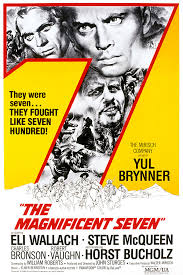
Adrian graduated from Tech in 2002 with an MIS degree and is now CIO and President. He works in the corporate office where a full-size rendition of this movie poster hangs prominently.
In 2003, the Take-Out Market opened at the Indiana location—more on this service later, and the key role it would eventually play during COVID shut-downs. In 2008, a second Caprock Cafe opened at 82nd and Slide, becoming Lubbock’s first smoke-free33 sports grill, and serving the southwest side of town and Wolfforth, and bringing the enterprise to where it stands today: 320 employees, two brands, four stores.
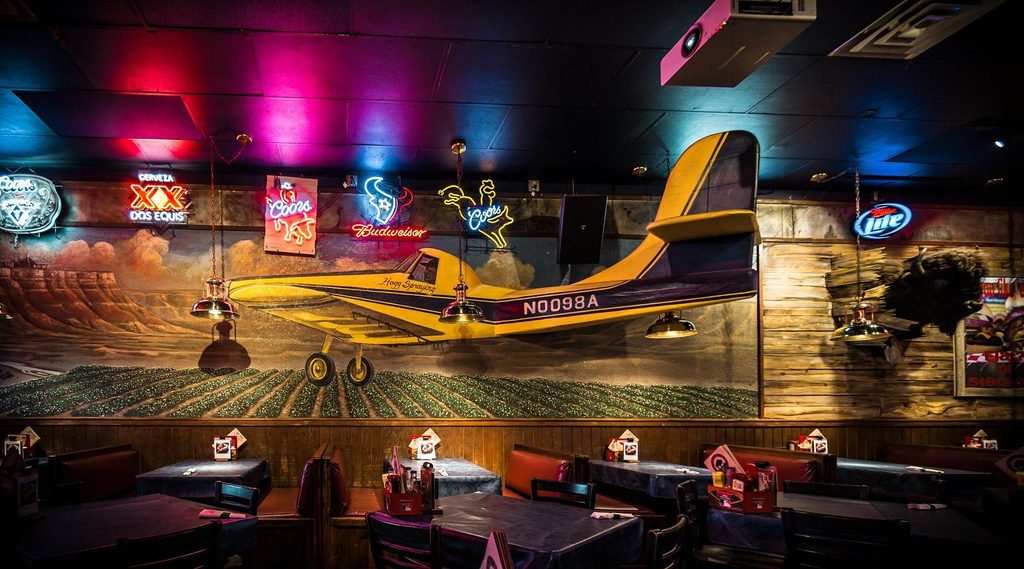
This brings to a close Loyd’s posted material, which I have relied on primarily for this chronological account. But it’s only a summary, and I encourage you to check out the original material yourself. In addition to his business and restaurateur chops, Mr. Turner is a talented writer and his wit and humor make for a great read.
Before moving on to my interview with David Cea, I’ll add one more chapter from Orlando’s history, set in the dark days of COVID in the spring of 2020. I include it here for a couple reasons. First, it shows how Orlando’s and the management team provided real assistance, in a time of real need, to their customers, staff, and suppliers. Second, it shows once again what has emerged as a central theme of this story: the group’s talent for turning adversity into opportunity—and also the operational moves for capturing that opportunity. Here we focus on the Indiana Ave. location, led by Jerol.
Feast or famine
The COVID restrictions arrived in Lubbock in March of 2020. By order, restaurants could no longer seat a single guest; dine-in service came to a halt, overnight. The impacts this had on various businesses, however, were sharply contrasting. Many restaurants shuttered and never reopened, while others—including Orlando’s—fared well. Grocery store shelves stood empty, picked clean by panic buying, while restaurant suppliers sat on mountains of food they suddenly could not sell.
At the Indiana location, takeout and delivery had been well established for years, and the moment the restrictions hit, demand shot up and they were busier than ever. Legal restrictions on the delivery of beer and wine were also relaxed, further adding to the demand. Thanks to the surge in customer orders, and to the financial discipline that management had always practiced, no long-term employee had to be let go.
One of the suppliers caught in a bind was Sysco Foods—an Orlando’s business partner of more than thirty years. The dine-in shutdown had left the supplier with far more product than they could move, particularly beef and chicken. Sysco approached the Orlando’s team for help, and they stepped up, as loyal partners do. Pallets of food began moving from Sysco’s overstock into the freezers at the Indiana location. Jerol writes:
“We received cases of beef in chubs (10-pound packages) from Sysco that we put onto pallets in our walk-ins. We received so many cases that the walk-ins were now packed full and there were only trails to walk through!”
Then they pivoted to their own customers, selling the beef, chicken, and later eggs and even toilet tissue, essentially at wholesale prices. “Many customers would come in with coolers and buy 20, 30, 50 pounds of beef!” Jerol recalls.
“Maybe my proudest working years were the COVID Years. The things that my partners and I did as a company, for our stores, for our community, and for our staff and each other are highlights in my work.
“True story: During COVID, some of our regulars would drive up to Orlando’s, buy some chips and queso or maybe a pizza in the take-out market and then sit in their pickups, side by side, in the parking lot looking longingly at their restaurant of choice (Orlando’s) while they sipped a couple of cold ones and chatted like old times. It was important. It was also Absolutely Amazing!”
“A very delicate endeavor”
The sudden shutdown of dine-in service was a challenge of course, but it did provide a rare opportunity for a full renovation of the main kitchen. The management met to discuss, and although the timing of any lifting of the restrictions was uncertain, they voted and gave the go-ahead. The logistics of what happened next are a bit complicated, but if you like a good operational puzzle (literally) and how they navigated through it, settle in.
The Indiana location has two separate kitchens—one for the main dining room and a second for take-out and delivery. And for the most part, the kitchens are each stand-alone—except for one common prep area, which is located within the main kitchen. The prep area is where all the washing, peeling, slicing, dicing, shredding, marinating, and simmering are done—basically any task that would be impossible to do during the rush of lunch or dinner service. Shut down the prep area and the kitchen service stops, even if everything else is ready to go. The fact that the prep was located within the main kitchen, is what made an already difficult project—a complete renovation while still open for business—even more complex. It would be, as Jerol described it, “a very delicate endeavor!”
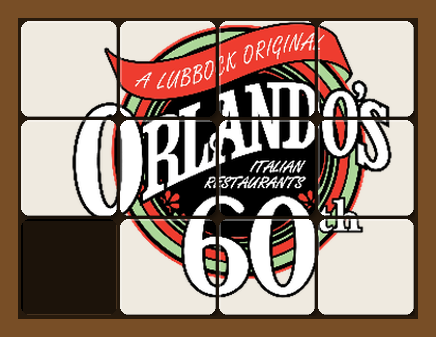
To explain how they accomplished it, envision playing with one of those old “sliding tile” puzzles—remember those? They began by laying down tarps, and moving all the heavy equipment and shelving from the kitchen into the dining room, leaving behind only the prep area and its equipment, partitioned off and fully functional.
One section of the kitchen at a time, they would complete the renovations to walls, ceilings, electrical, whatever was needed, finishing up with new floor coating. As soon as the work was complete and the floor was dry, like sliding a puzzle tile, they’d move the entire prep area—tables, sinks, shelving, everything—into the newly renovated space, re-do the partition, and move on the next section of the kitchen, all while avoiding disruption to the take-out and delivery service. “After the kitchen work was complete,” Jerol recalls, “we moved all the equipment and shelving that was in the dining rooms back into the kitchen and reset the kitchen—now ready to work for another 25 years or more, better than ever. Fabulous!”
With the kitchen renovations complete, the board met again. Was there enough time, they wondered, before the restrictions might be lifted, to do the same for the front of the house—the dining rooms and bar? Again they voted, and again decided to proceed.
With a similar process, tables and chairs from one room were moved temporality into adjacent rooms, to allow for new paint and carpeting. This was repeated for all three dining rooms, until “every table, chair, and booth was reinstalled—better than ever.”
In the bar, they re-did the long bar top, and poured new flooring to provide high traction, scuff resistance, and a brilliant shine—”the same product (and the same company) who refinished gym floors in high schools around West Texas! The bar now functioned better and looked better than pre-COVID!”
Reflecting back on this challenging but rewarding time, Jerol writes:
“In my whole life, I am not sure I have ever worked harder. During the entire project, I rarely wrote anything down. The entire plan was in my head, step by step. Most of the time, it worked. The management and staff were amazing. They “held down the fort” while my focus was the remodel and they did a great job. I am very thankful for all of them!
True, I wore a mask because I had to during Covid, but I felt like I wore a Superman shirt every day when I went to work. It was a crazy time, but I feel like our company did their best to help the public and to make our store better than ever before.
With God’s Blessings, we survived.”
“Great food, clean joint, great service”
With a better understanding of Orlando’s history, on then to my interview with David Cea, from April of this year, 2026, where I hoped to gain a better understanding of the ‘secret sauce’ behind their long-term success.
“The reason we’re still here is because we’re very, very consistent in what we do. We focus on food, service, cleanliness, training, every single day. My dad had a saying, you know, ‘great food, clean joint, great service.’ And so those are the three things that we just kind of carried with us and we’ve been focused on it ever since.”
Industry experts agree. In “How to Survive 100 Years,” Kelly Killian, editor of trade publication Restaurant Business writes that “Secret No. 1” is to “Do the same thing well every time” and that “consistency in service, quality, the menu—the whole experience—is what keeps people coming back.” 34
David also mentioned the importance of family, and working together in the business:
“You know, it’s kind of funny because so, Loyd met his wife here…my CIO met his wife here. I met my wife at the other Orlando’s. So it’s funny how we’ve all just kind of, you know, our whole lives have revolved around this, you know, these two stores or these two brands, if you will.
And, you know, all the spouses were involved in the business. Karen was an operating partner, so she ran this door up until February. My wife works at the corporate office with Jerol’s wife, and they handle all the payables and the 401k and payroll and all that. And so it’s definitely a family business.”
Not surprisingly, the fair treatment of employees and business partners has always been a priority:
“In Texas, people are friendly. We have a huge employee pool right there with Texas Tech. So it’s not hard to find great staff. Matter of fact, I tell people all the time, we’re actually overstaffed right now, and it’s because we pay more than anybody else in town. What I found out a long time ago is if you take care of your people, they’ll take care of you.
We treat people like we want to be treated. And I would also say that, you know, there’s, over the years, there’s a lot of extra money that we could have made by doing things the wrong way or the illegal way. We’ve never done that. We would rather make a little less money and have our, what’s the word I’m looking for? Not credibility, but our reputation intact. And that’s just the way we do business. And what goes around comes around. We’ve had a lot of people take advantage of us and screw us out of money, but we’ve never done that. We’ve never taken advantage of anybody or ever treated somebody unfairly. Matter of fact, I would say over the years there’s been many, many a situation where we went above and beyond trying to be fair with somebody and it just didn’t work out. But you do what you can.”
Pennies, whether they make them anymore or not, remain important for longevity:
“When your margins are smaller as they are in this particular industry, if you’re not efficient, you’re not going to survive. Because pennies mean a lot. So you save a penny here, a penny there, whether it’s a new POS system or a new way of doing things. That’s how you survive. And if you don’t pay attention to the pennies in this business, you won’t survive. I always tell people there’s more ways to lose money in this business than there is to make money in this business. You know, you can have all the sales in the world, but if you’re not controlling your pennies, you’re not going to make it.”
David emphasized the importance of learning from others in the industry:
“Another reason to our success is because over 30 years ago, I got involved in a trade association, the Texas Restaurant Association, and became extremely good at networking.
And so I mean, I have so many fellow restaurateurs in the state that I know that if there’s something I can’t figure out on my own, I can call them and go, ‘Hey, what do you do?’ ‘Oh, we do this.’ And so that’s been a huge plus to our business.”
And of course, for all of this, there’s no substitute for hard work. I asked David about how many hours he worked per week, on average:
“Fifty? Sixty? We’re all in, I mean, we’re in the trenches. We’re in the stores five, six days a week. I mean, I’ve worked three stores today before I came here. I’ve already hit three different locations today…I’m a very hands-on kind of guy. So, the challenge is, if you have the right management team, you don’t have to work for 50, 60, 70 hours a week, but finding good managers is tough… I remember when we opened up the store [Caprock Cafe] on Slide Road, I was working 80 hours a week.”
He offered his thoughts about living and working in Lubbock:
“I think Lubbock is a great place to live, especially a great place to raise a family. And it’s a great place to do business because people in Lubbock are genuine. You can still do business on a handshake in Lubbock…Lubbock is a big town with a small town attitude.”
So what I see happening in Lubbock right now…it’s crazy how fast this town is growing. So that said, there’s still a lot of restaurants that are coming into this market. I mean, every other day there’s a new restaurant opening up. But every other day there’s a new restaurant closing.
What people have to understand about Lubbock is, Lubbock is a brutal market. Here’s why. So there’s a lot of really good restaurants in Lubbock. So when you open up, if you don’t execute from day one, you’re done. You get one shot in Lubbock. And if you don’t pull it off, you’re done.
You know, and unlike the big cities, we don’t have a constant flow of tourists coming in, unless there’s a football game or George Strait’s in town or something like that. So you really have to take care of the people, the customers that you have. And if you don’t, there’s really good restaurants in town. Some of them are chains, most of them are independents like us, that just really pay attention to what they’re doing.”
What about the future? Where’s the restaurant business headed?
“You know, these trends come and go. There for a while, the big trend was drive-throughs. Now that trend’s gone. And then the big trend was grocery stores. Everybody’s buying, eating at grocery stores. That trend has slowed down, you know? It’s kind of like cafeterias. Cafeterias came and went. I don’t know what’s next, but if you can adapt and pivot, no matter what people want, if you can give it to them, you’re going to survive, you know?”
Any changes planned for the original Avenue Q. location, the one they affectionately call “the Bohemian store”?
“You know, one of the things that we’re going to kind of try…to take it back a little bit to where it looked more like the original store. I mean, it’s come through a lot of changes. Just freshen it up, not really change anything. The foods, we’re not changing anything in the food. We never do.”
What about the wicker candles? You’ve got to bring those back.
“The ones that set the wall on fire? No, the fire marshal outlawed those years ago.”
Can’t have everything.
The secret sauce
Finally, I asked David about his long-running partnership with Loyd Turner. Here’s what David had to say:
“So Loyd and I have been partners 47 years. He bought in with my Dad in ‘78. And so Loyd had just got out of, you may have heard this story, he had just got out of business school. So he shows up and he was looking to get…he wants to open a bakery. He heard about this little Italian restaurant that was looking to be sold, or for partners. And so he shows up, he’s got a beard down to here, hair to the middle of his back. And my dad and I just looked at each other and went, ‘Oh my God!’
Turns out he’s one of the smartest men I’ve ever met in my life. He’s very generous. Not only is he my partner, he’s my friend and he’s my mentor. And so I don’t know many people that could say I’ve had a partner that I get along with for 47 years. So we’ve had our little tiffs and stuff, but we’ve always just been pretty much on the same page.”

On the Orlando’s website is the “Orlando’s and Natural Foods” story written by Loyd, not long after he first joined.35 In that story, appears this diagram of the yin-yang philosophy,36 the idea that forces which are sometimes opposing, are also complementary and interdependent. Might this describe the partnership between David and Loyd, who while different, have worked together, interdependently and complementary, for nearly five decades?
The image of David that has stuck with me from my first visit, is that of a guy, standing at the railing, watching over his business. And the image I have of Loyd is that of a young guy, fresh out of college, long hair, heading out across the country in a Super Beetle. Though the time frames differ, wouldn’t that pair of contrasting images count as an example of yin-yang? Yes, I think so.
And by extension, perhaps the same dynamic describes the entire management team and the secret sauce for their longevity: partners at work and/or in life, sometimes opposing but working interdependently and complementarily, and for almost as long as Loyd and David. Nothing against Mike and the foundation he created, but while we have focused primarily on the 60-year run, by this point, most of those 60 years have been overseen by the current team.
‘But of course,’ you might say. ‘Of course this partnership is why Orlando’s has lasted sixty years. We knew that already.’ Maybe the secret sauce, then, is a level deeper.
A level deeper, I think the answer may be: Consistency. Just like David said: “The reason we’re still here is because we’re very, very consistent in what we do.”
A level deeper still: Do what consistently? Here, I think, we arrive at bedrock. Go ask Loyd: “Treat people like we would want to be treated whenever possible.” Go ask Jerol: “Treat people like they should be treated.” Ask David: “Take care of your people, they’ll take care of you…what goes around comes around.”
Turns out, the secret sauce isn’t so secret. It’s the Golden Rule. The miracle is that they’ve actually been doing it, consistently, for the last 60 years and counting.
Notes
The word “vestibule” traces to the Latin vestibulum — the forecourt of a Roman house, the small zone between the street and the atrium proper, in use as far back as the second century BCE. Architect Lisa Heschong writes that the thermal contrast provided by the vestibule—the shift from blazing sun into cool shade—can be a pleasant sensation, not an inconvenience to design away. Orlando’s vestibule is small but doing exactly what vestibules are designed do. Reference: Heschong, Lisa. Thermal Delight in Architecture. Cambridge: MIT Press, 1979. ↩︎
The relief isn’t your imagination. The sunshine in Lubbock comes from directly overhead—about 80 degrees in the summer. The high altitude and low humidity mean the air diffuses less and absorbs less of the sun’s UV rays. High sun angle, high altitude, low humidity—all three conspire. The sunshine in Lubbock isn’t hotter, but it feels that way, compared to a similar sunny day in Dallas. Still beautiful, though. Here’s some genius-level proof of that, from Khruangbin and Leon Bridges: https://www.youtube.com/watch?v=_jSAIoZW6oE ↩︎
Travis Ware has a successful law practice in Lubbock, and he is also a former Lubbock County District Attorney. More here: https://www.traviswarelaw.com/. From Jerol Fanta, I learned there were two other named booths: the “Loyd & James “Booth of Iniquity””—these were two men who would walk into the restaurant and head directly to the booth with their name! And “Don Caldwell’s Meetin’ Booth”—Don Caldwell was very influential in the Lubbock community particularly in the music scene. More on Don here. ↩︎
The phrase itself predates New Mexico’s official adoption of it by nearly a century. In 1906, Boston journalist and travel writer Lilian Whiting published The Land of Enchantment: From Pike’s Peak to the Pacific, a grand tour of the American Southwest by rail. Whiting wrote that “in our own country there are enchanted regions in which the traveller feels that he has been caught up in the starry immensities and heard the words not lawful for man to utter.” ↩︎
Long-term survival for any small business is hard, especially for restaurants. It’s not as grim as the hyped-up claim “90% fail in their first year!”—that’s a myth. The most rigorous study of restaurant survival, Luo and Stark’s aptly titled “Only the Bad Die Young” — a Kaplan-Meier survival analysis of 81,000 independent full-service restaurants drawn from a non-public BLS census of 1.9 million businesses — found that about 17% fail in year one. The data also shows a steep early decline that levels off over time: only a third make it to year ten, but then the failure rate slows—the so-called “plateau effect,” the well-documented tendency of long-survivors to outlast the actuarial odds. Calculating a 60-year survival rate is challenging because even the best data sources tap out around year 20, necessitating, therefore, some fancy mathematics. Using the Luo and Stark survival curve to derive a Compound Annual Decay Rate (CADR) of approximately 5-7%, and projecting that forward to year 60, produces an initial estimate of roughly 2-3% survival. Adjusting upward to account for the plateau effect produces a conservative estimate of 4-6%. We settle on the 60-year survival rate of approximately 5% as a reasonable, defensible midpoint. Almost, but not quite, as rare as hen’s teeth.
References: Kaplan, E.L., and Paul Meier. “Nonparametric Estimation from Incomplete Observations.” Journal of the American Statistical Association 53, no. 282 (1958): 457–481. Luo, Tian, and Donald Stark. “Only the Bad Die Young: Restaurant Mortality in the Western US.” arXiv:1410.8603, October 2014. https://arxiv.org/abs/1410.8603
U.S. Bureau of Labor Statistics. Business Employment Dynamics, Table 7: Survival of private sector establishments by opening year. https://www.bls.gov/bdm/us_age_naics_72_table7.txt.
Susskind, Alex, quoted in Killian, Kelly. “How to Survive 100 Years.” Restaurant Business Online, republished at Serve It Up Safe. https://serveitupsafe.com/successful-restaurants-how-to-survive-100-years/ ↩︎
Pap: soft, bland food suitable for infants or invalids. By extension, writing or ideas so lacking in substance, challenge, or creative value that they insult the intelligence of anyone too young or too old to chew. ↩︎
Verbatim quotes, unless otherwise noted, are taken from Loyd’s posted documents. ↩︎
The first known use of this phrase in print belongs to John Babsone Lane Soule, who wrote “Go west, young man, and grow up with the country” in an 1851 editorial in the Terre Haute Express. Horace Greeley, editor of the New York Tribune, reprinted it, attributed it to Soule, but the attribution got lost over time and the phrase stuck to Greeley instead. ↩︎
Between 1880 and 1920, more than four million Italians passed through Ellis Island, making them the single largest immigrant group in the station’s history. In 1907, the peak year, they were the dominant presence among the more than one million arrivals processed that year alone. For eighty percent of them, the purported ordeal of Ellis Island lasted just a few hours before they stepped onto a ferry bound for New York City and whatever came next. Cannato, Vincent J. American Passage: The History of Ellis Island. New York: Harper, 2009. Library of Congress, “The Great Arrival.” Immigration and Relocation in U.S. History. https://www.loc.gov/classroom-materials/immigration/italian/the-great-arrival/ ↩︎
U.S. Census Bureau, Census of Population: 1950, Volume I, Number of Inhabitants and Census of Population: 1960, Volume I, Number of Inhabitants ↩︎
Texas Technical College became Texas Tech University on September 1st, 1969, although “Texas Tech” was already in common parlance. More here. ↩︎
Santa Land is a Lubbock tradition, dating back to at least 1956. More here. Reference: “Gilmore’s Has Seat Covers for Cars.” Advertisement. Lubbock Avalanche-Journal, December 3, 1962, p. 29. ↩︎
Dan Bouk, “Generation Crisis: How Population Research Defined the Baby Boomers,” Modern American History 1, no. 3 (November 2018): 331, https://doi.org/10.1017/mah.2018.31. ↩︎
Texas Tech University, Institutional Research. “Historical Total Enrollment.” Accessed May 31, 2026. https://www.depts.ttu.edu/irim/HistoricalData/Historical_Total_Enrollment_Tab.php. ↩︎
In newspaper slang, headlines in fonts larger than the masthead were called “screamers,” or dating back further, “wood” since letters that size were literally carved from blocks of wood, which were much lighter and cheaper than metal. More here. ↩︎
Koufax threw a 3-hit shutout with 10 strikeouts—on just two days rest. Here’s the post-game interview with another great, Vin Scully. ↩︎
Orlando’s Italian, Success Made to Last.” Texas Country Reporter, Season 51, Episode 16. February 4, 2023. Interview with David Cea conducted by Bob Phillips and Kelli Phillips. https://tcr.texasmonthly.com/episode/orlandos-italian-success-made-to-last-podcast-and-city-shoe-shop/. ↩︎
The use of “millinery” bags for to-go pizza pre-dates the now-familiar cardboard boxes that became the norm in the mid-to-late 1960s. The paper kept the pie warm, while also allowing enough steam to escape to prevent a soggy crust. Some shops and taverns back east still use them. The name comes from the bags used by milliners, or hat makers. And before that, ‘milliner’ can be traced back to goods from Milan, Italy, including not only hats, but also ribbons, scarves, cutlery and other luxury items; also “Milan-er”—a person from Milan. Oxford English Dictionary, “milliner (n.),” March 2026, https://doi.org/10.1093/OED/1114150272. ↩︎
Sort of like in real life? ‘IYKYK’ as the youngsters write. ↩︎
The Ming Tree is another great story, opened in 1951 by Ted Quan, who came to Lubbock via San Francisco and…Albuquerque? What is it with Albuquerque and Lubbock restaurants, anyway? Born in Canton, China, Mr. Quan was a magician, and did full magic/dinner shows and table-side tricks. He retired in 1986, and passed away in 1999. Great photos and more info here. ↩︎
https://www.tshaonline.org/handbook/entries/lubbock-tx In 1971, the 26th Amendment to the U.S. Constitution lowered the voting age from 21 to 18. Vietnam-era draftees and activists invoked what was originally a phrase from the post-WWII era: ‘Old enough to fight, old enough to vote.’ That same logic, re-ramed as ‘old enough to fight, old enough to drink’ compelled 29 states, including Texas, to also lower the legal drinking age to 18. In 1981, over concerns with high school drinking, the Texas Senate voted 26-2 to raise the limit from 18 to 19, and then to (the current) 21 in 1986. Also see here on the changes to Lubbock alcohol ordinance and related changes since the 1970s. ↩︎
“Rate Hike at Stake,” Lubbock Avalanche-Journal, April 10, 1972, 1 (reporting city voters’ approval of liquor by the drink in Saturday’s referendum) ↩︎
Texas Country Reporter, Season 51, Episode 16. ↩︎
More info here: https://www.sanantoniosnacks.com/about-toms ↩︎
Here we borrow from Loyd’s “Orlando’s and Natural Foods” story, also available on the Orlando’s site: https://orlandos.com/natural-foods ↩︎
Source: Author correspondence with Jerol Fanta. ↩︎
This ‘wreck and recovery in a new direction’ experienced by both David and Mike was similar enough that I wondered if it was a recognized pattern—turns out, it is, and there’s a name for it: post-traumatic growth (PTG). Research shows that struggling with and eventually overcoming serious adversity produces a heightened sense of new possibilities and lasting shifts in direction. Richard G. Tedeschi and Lawrence G. Calhoun, “Posttraumatic Growth: Conceptual Foundations and Empirical Evidence,” Psychological Inquiry 15, no. 1 (2004): 1–18. ↩︎
His home state, by less than 4,000 votes. ↩︎
Defense, shmeefense. ↩︎
Orlando’s Italian, Success Made to Last.” Texas Country Reporter, Season 51, Episode 16. ↩︎
By 2011, both Caprock Cafe locations and both Orlando’s locations were smoke-free. ↩︎
“How to Survive 100 Years.” Restaurant Business Online, republished at Serve It Up Safe. https://serveitupsafe.com/successful-restaurants-how-to-survive-100-years/ ↩︎
Accessible here: https://orlandos.com/natural-foods ↩︎
The taijitu (太極圖) is the ancient Chinese diagram depicting the yin-yang principle—the philosophical proposition that opposing forces are not merely in conflict but are complementary, interdependent, and together constitutive of a greater whole. The concept originates in Taoist thought and has informed Chinese medicine, cosmology, and martial arts for more than two millennia. See also: Robin R. Wang, Yinyang: The Way of Heaven and Earth in Chinese Thought and Culture (New York: Cambridge University Press, 2012). ↩︎